What Is Search Intent in SEO? Why It Can Make or Break Your Content

You can spend hours researching keywords, writing content, and checking every little SEO detail before publishing. But what if your blog still doesn't rank, even after all that work?
As someone who writes SEO content regularly, I know how easy it is to get caught up in keywords, content scores, and making sure you've covered everything. But one thing I've learned is that having the right keywords doesn't always mean you're giving readers what they actually came for.
And that's where search intent matters.
Think about it. Someone searching for "best SEO tools" probably wants to compare a few options before deciding what to use. They don't want to land on a page that only talks about one company's services.
The keywords might be relevant, but the content isn't answering the question.
That's why I always think it's worth checking what people expect to find before putting an article together. Let's talk about what search intent means, why it matters, and how you can use it to write better SEO content.
What Is Search Intent in SEO?
Search intent is the reason someone enters a keyword or question into a search engine. Also called user intent or keyword intent, it explains what a person wants to know, find, compare, or do.
For example, someone searching for "what is SEO content writing" probably wants a simple explanation. But someone searching for "hire an SEO content writer" is more likely looking for a service.
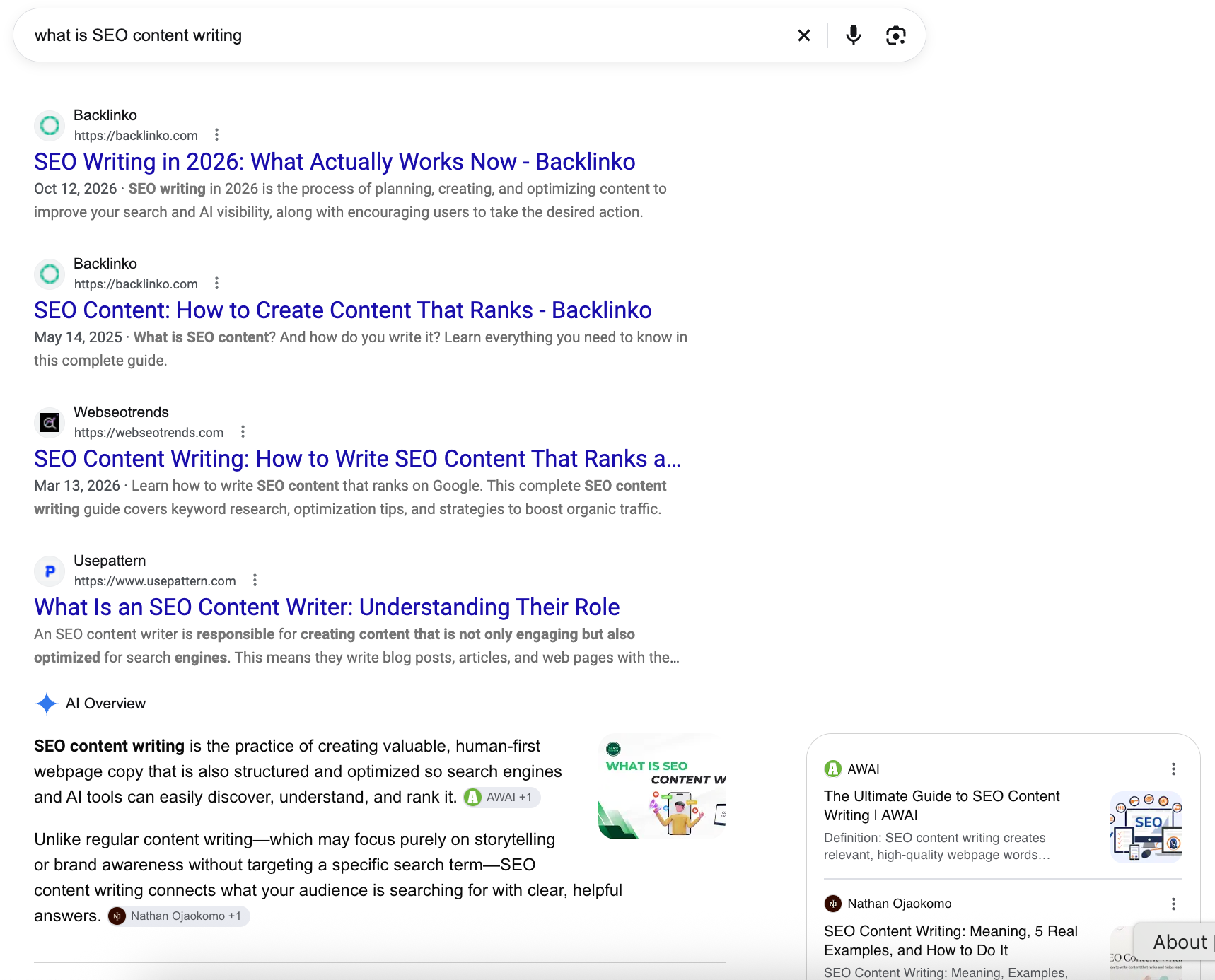
Both searches are about SEO content writing, but they have very different purposes.
This is why search intent goes beyond choosing the right keywords. You need to understand what readers expect to see when they click on your page.
And sometimes, the difference between useful content and content that misses the mark comes down to that one detail.
Why Is Search Intent Important for SEO?
Search intent matters because Google wants to show people results that match what they're actually looking for. So, even if you've used the right keywords, your content may still struggle to rank if it doesn't answer the reader's question.
According to Google's explanation of how Search works, its systems first try to understand the intent behind a search. They also look at how relevant and useful a page is, along with other factors such as content quality and usability.
Think about it. If someone searches for "how to write a blog post," they're probably expecting a guide they can follow. A page explaining why blogging is good for business might contain the same keywords, but it doesn't give them what they came for.
Understanding search intent can help you:
- Create more relevant content by answering the questions your readers actually have.
- Attract the right audience instead of focusing only on getting more traffic.
- Choose the right content format based on what people expect to find.
- Plan your content better by knowing which information deserves attention.
Of course, matching search intent doesn't guarantee higher rankings. Competition, content quality, and other SEO factors still matter.
A Quick Reminder: A high content score doesn't always mean you've answered the reader's question. I've found that SEO tools are helpful for checking keyword coverage, but they're not a replacement for looking at the actual search results and understanding what readers want.
What Are the Four Types of Search Intent?
In SEO, search intent is usually divided into four categories: informational, navigational, commercial, and transactional.
Understanding these categories helps you figure out what kind of content makes sense for a keyword.
| Search intent | What it means | Search example |
|---|---|---|
| Informational | Someone wants to learn something or find an answer. | How to write SEO content |
| Navigational | Someone wants to visit a particular website or page. | Google Search Console login |
| Commercial | Someone is researching or comparing options. | Best SEO writing tools |
| Transactional | Someone is ready to take action, such as buying or hiring. | Hire freelance SEO writer |
One thing worth remembering is that not every keyword fits perfectly into one category.
Take "best SEO writing tools," for example. Someone might want recommendations, but they could also be comparing prices or looking for free options.
This is why I wouldn't rely entirely on the intent category shown in an SEO tool. It's a good starting point, but the actual search results often tell you more.
How to Identify Search Intent Behind a Keyword
The best way to identify search intent is to check what Google is already showing for your target keyword.
This is something I usually do before creating a content outline. Even when I already have the keyword and topic, I still want to see what kinds of pages are ranking and what information they're covering.
Analyze the Top Search Results
Start by searching your keyword on Google and reviewing the first few organic results.
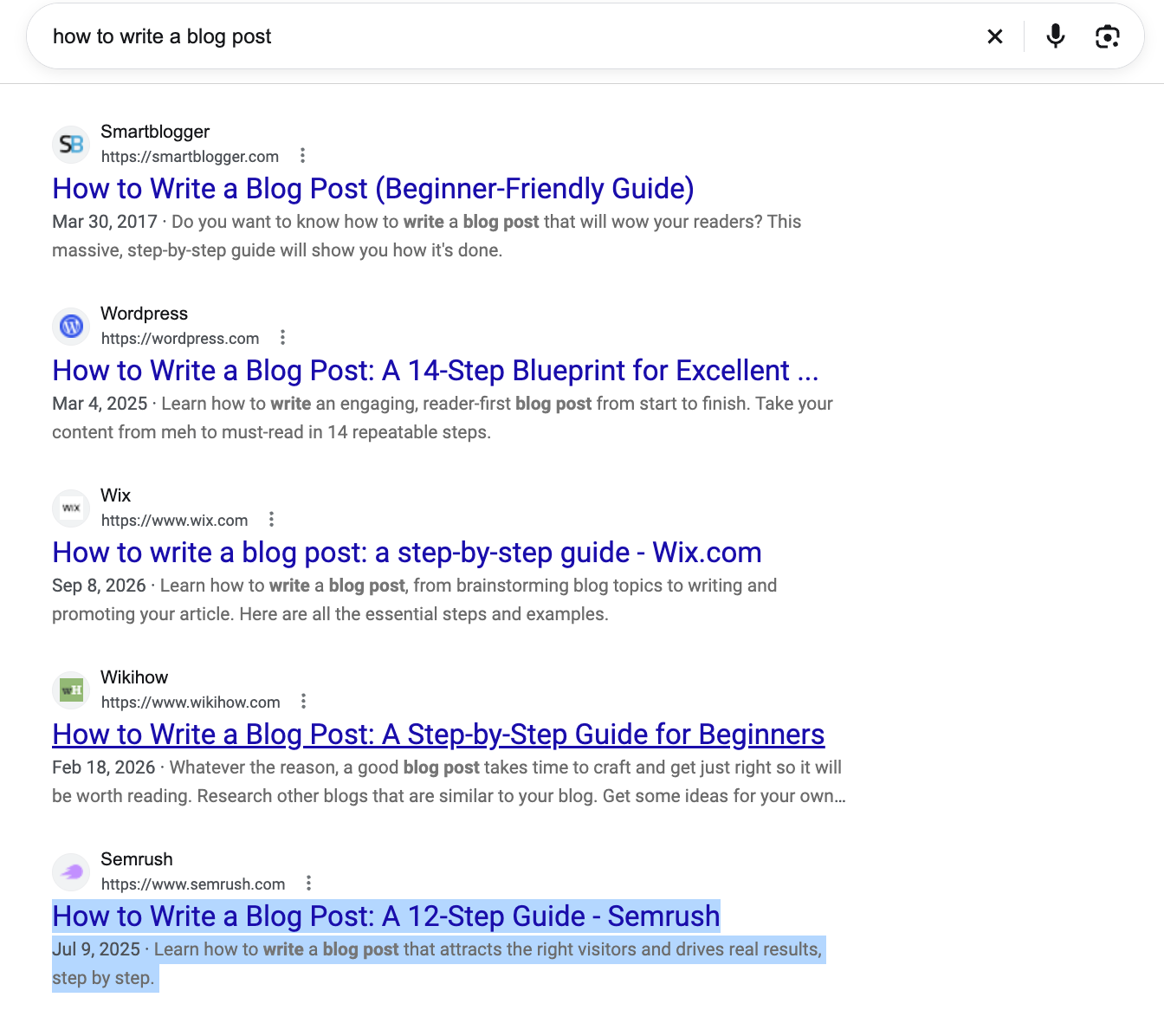
Look at the titles, page formats, and common topics. Are most results educational guides, comparison articles, service pages, or tools?
Ahrefs explains this approach through the three Cs of search intent:
- Content type: The kind of page ranking, such as a blog post, product page, or landing page.
- Content format: How the information is presented, such as a tutorial, list, or comparison.
- Content angle: The main focus of the content, such as beginner-friendly advice or current recommendations.
For example, if you search "how to write a blog post" and most results are step-by-step guides, writing a general article about the benefits of blogging probably won't be enough.
Look at Search Queries and Related Questions
Sometimes, the keyword itself gives you a clue about what someone wants.
Words like "how," "what," and "why" often suggest informational searches. Meanwhile, terms like "best," "review," or "vs" can suggest that someone is comparing options.
I also like checking Google's People Also Ask section because it can reveal questions readers might have after their initial search.
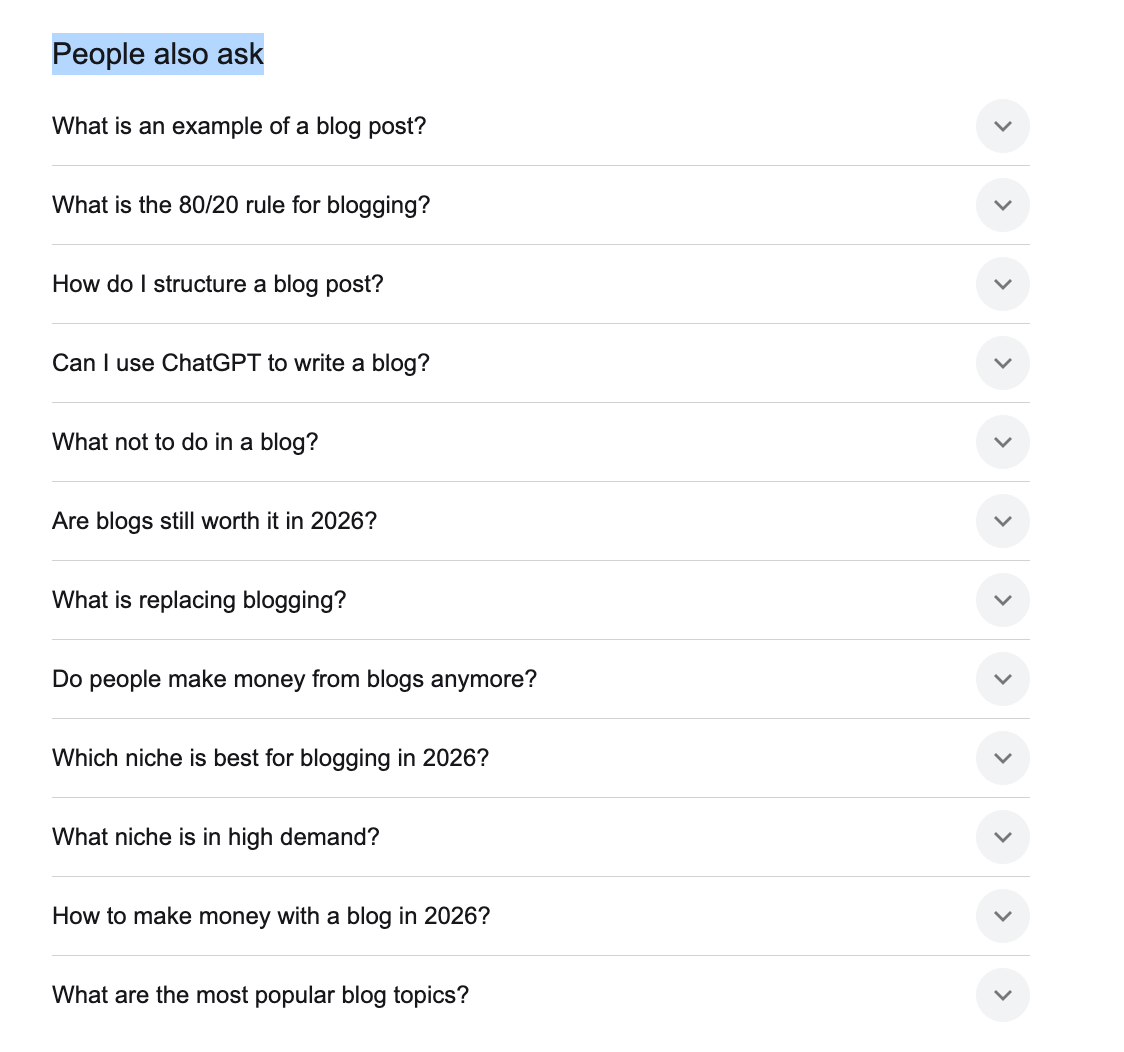
But I wouldn't recommend adding every related question to your article. Some might sound relevant but take the discussion away from the main topic.
Use SEO Tools to Check Your Findings
SEO tools can make keyword research easier by showing search intent, related keywords, and competing pages.
I use these insights as a reference, but I don't treat them as the final answer.
If a tool says a keyword has informational intent but Google mostly shows comparison articles, that's worth investigating.
The goal isn't to copy whatever is ranking. It's to understand why those pages make sense for the search.
What Happens When Content Doesn't Match Search Intent?
When your content doesn't match search intent, people may visit your page and leave because they didn't find what they needed.
And sometimes, the problem isn't that your content is poorly written. It's that you're giving readers the wrong type of information.
Let's say someone searches for "free backlink checker." They probably want a tool they can use immediately. An article explaining what backlinks are might be helpful, but it doesn't complete the task they came to do.
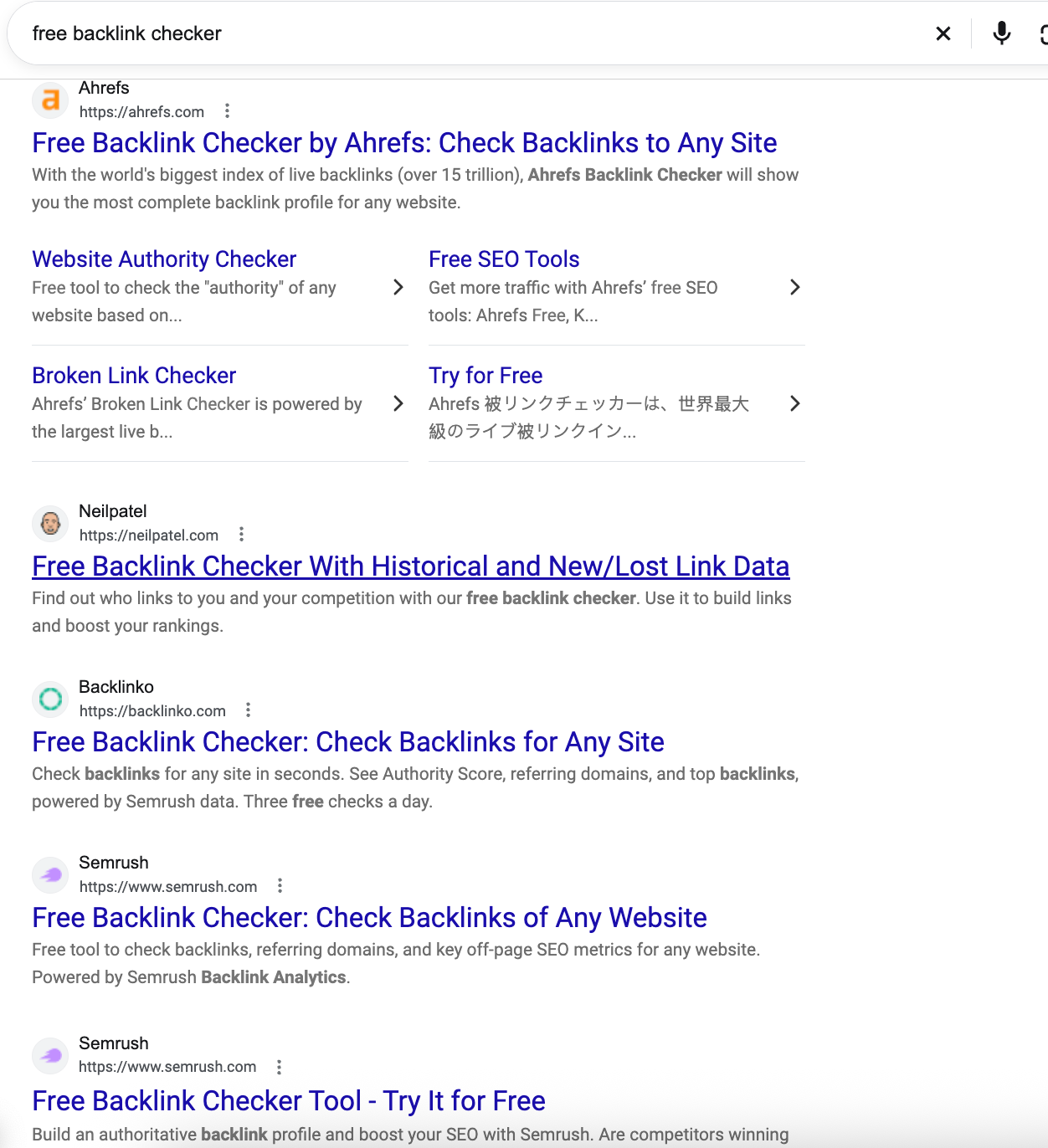
Ahrefs experienced something similar with its backlink checker page.
Real SEO Example: Ahrefs reported a 516% increase in traffic in less than 6 months after adding a free backlink checker to its landing page. The change helped match what people searching for "backlink checker" actually wanted. Of course, this was Ahrefs' own result, not a guarantee of similar traffic growth.
I think this example explains search intent better than simply saying Google prefers relevant content. You could have a detailed, well-written page, but if people want a tool and you're giving them an explanation, there's still a mismatch.
How to Create Content That Matches Search Intent
Once you understand what readers are looking for, creating content becomes a little more straightforward.
But that doesn't mean you need to make every article longer or include every related keyword. Sometimes, the better approach is to focus on what matters most.
Here's what I usually consider when planning SEO content:
- Answer the main question early. If someone wants a definition, give it to them before adding background information.
- Choose the right format. A comparison keyword might need a table, while a how-to search may work better with numbered steps.
- Cover useful supporting topics. Include questions that help readers understand the subject without moving too far away from it.
- Use examples to explain your points. Real situations make it easier for readers to understand why something matters.
- Review your content after publishing. If a page isn't performing as expected, check whether its format and information still match the search results.
These are also things I consider when writing SEO content that ranks.
I've found that keyword placement and content scores are useful, but they shouldn't decide everything you include. Your article still needs to make sense to the person reading it.
How Search Intent Helps You Write Better SEO Content
One thing I've learned from writing SEO articles is that more content doesn't always mean better content. You can have a long article with plenty of headings, examples, and keywords, but that doesn't mean you're answering what readers actually want to know.
Let's say you're writing about "SEO content strategy." You could cover keyword research, content calendars, internal linking, and performance tracking. All of those topics make sense, but what if the reader simply wants to know how to create a content strategy?
I'd focus on explaining the process first before getting into the other details.
This also lines up with Google's people-first content guidance, which encourages content that offers original information and helps readers learn enough to achieve their goals. Google also makes it clear that there's no preferred word count for ranking.
And I think that's worth remembering, especially when you're trying to cover every related keyword or match the length of competing articles. You don't need to answer every possible question in one blog. You need to answer the questions that matter most to your readers.
Does Search Intent Still Matter for AI Search?
Yes, search intent still matters for AI search because people are still looking for answers. They're just asking questions in different ways.
For example, someone might type "SEO content strategy" into Google. But when using an AI assistant, they might ask, "How do I plan SEO articles for a new website that doesn't have much traffic yet?"
The second question gives more context about what the person needs.
This is why I think clear explanations, relevant examples, and well-organized content matter even more when you're writing for readers who use both traditional search and AI tools.
My Content Writing Tip: Try answering the main question directly below each important heading, then explain it with context or an example. This makes your content easier to scan and understand, although it doesn't guarantee that AI tools will cite your page.
I wouldn't write an article just to get mentioned by AI tools. I'd rather focus on making the information genuinely useful, easy to follow, and worth referencing.
Better Search Intent Starts With Understanding Your Readers
If there's one thing I want you to remember, it's that good SEO content isn't just about using the right keywords. It's about understanding why someone searched for them in the first place.
That's something I keep in mind when working on content, especially when deciding what to include, what to remove, and how to organize an article. And it can make a real difference when you're reviewing an existing page that isn't performing as expected.
Of course, not every content update will lead to higher rankings. Competition, website authority, and other SEO factors still affect the outcome. But understanding search intent gives you a better place to start.
If you need help with professional SEO content writing, I'd be happy to discuss how your content can better answer the questions your audience is asking.
Frequently Asked Questions
What are the types of search intent?
The four types of search intent are informational, navigational, commercial, and transactional. They describe people who want to learn something, find a website, compare options, or complete an action.
How do I find search intent?
Search your target keyword and look at the top-ranking pages. Compare their content formats, headings, and main topics to understand what people expect to find.
Why does search intent matter?
Search intent helps you create content that answers readers' questions and matches their expectations. This can improve content relevance and help you attract visitors who are interested in what your page offers.
What are the 3 C's of SEO?
In search intent research, the three Cs are content type, content format, and content angle. They help you understand what kind of content appears in search results and how it's presented.
Is SEO dead or evolving in 2027?
SEO is evolving as AI-powered search changes how people find information. Understanding search intent, creating useful content, and answering questions clearly still matter for reaching your audience.
Disclaimer: This article is for educational purposes and reflects general SEO practices and my approach to content writing. Rankings, traffic, and other results vary depending on competition, website performance, and changes to search systems. Case studies are examples, not guarantees of similar results.